Feeling Lazy or Unmotivated? It Could Be a Hormonal Issue
Feeling lazy or unmotivated doesn’t always mean you lack discipline. Often, your hormones are quietly draining your energy, mood, and focus. Learn how thyroid, stress hormones, and metabolism shifts can leave you stuck—and what you can do to feel like yourself again.

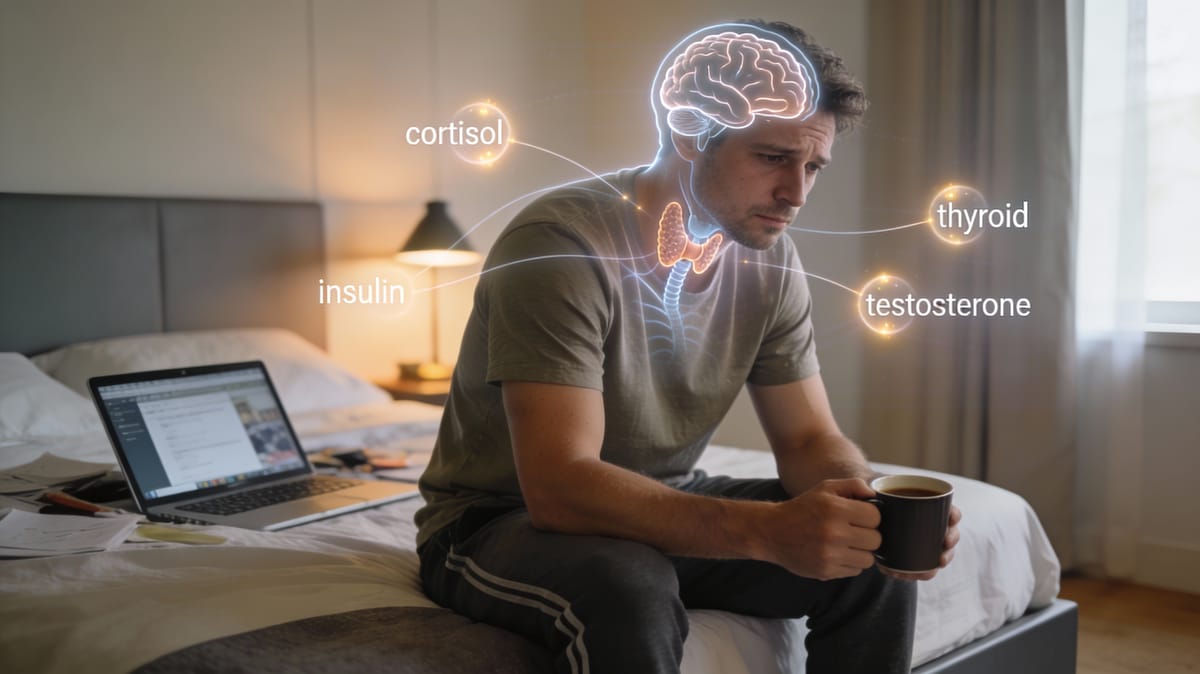
Feeling lazy, unmotivated, or “not yourself” is not just in your head—very often, it is in your hormones, quietly shifting your energy, mood, and drive long before blood tests or doctors ever catch it.
When “I’m just lazy” isn’t the truth
You know this pattern.
You wake up already tired.
Simple tasks—washing dishes, replying to messages, starting a project—feel strangely heavy.
You want to do better, to be productive, to feel alive again.
But instead you:
- Scroll your phone longer than you planned.
- Put things off “for later.”
- Feel guilty for not doing enough.
You may look at other people and think, “Why can they push through, and I can’t? Maybe I’m just weak. Maybe I’m lazy.”
Yet deep down, something feels off.
Your motivation, energy, and mood do not match who you know you truly are.
This is where a powerful truth comes in:
Feeling lazy or unmotivated? It could be a hormonal issue, not a character flaw.
Hormones quietly shape how awake, focused, hopeful, and driven you feel. When they drift out of balance, life starts to feel like walking through mud.
How hormones secretly shape your motivation
Hormones are your body’s chemical messengers.
They flow through your bloodstream, telling your cells how much energy to make, how quickly to burn calories, how to respond to stress, and even how much joy or reward you feel when you take action.
Some of the biggest players in low energy and low motivation are:
- Thyroid hormones – your internal engine speed.
- Cortisol – your stress and survival hormone.
- Testosterone and other sex hormones – your drive, confidence, and muscle support.
- Insulin – your blood sugar and energy stability manager.
- Leptin and ghrelin – your hunger and fullness regulators that affect cravings and mental clarity.
When these systems work smoothly, motivation feels natural.
You wake, move, think, and get things done without endless self‑negotiation.
When they are off, even thinking about tasks feels overwhelming.
Let’s break down how each hormonal pathway can quietly drag down your motivation—and what that actually feels like in real life.
Thyroid: when your internal engine runs on “low”
What the thyroid does
Your thyroid is a butterfly‑shaped gland in your neck.
It makes hormones (mainly T4 and T3) that set your metabolic rate—how fast or slow your body produces energy.
Think of it as your body’s engine speed:
- Balanced thyroid = steady energy and focus.
- Underactive thyroid (hypothyroidism) = slow metabolism, fatigue, and mental fog.
How low thyroid feel in daily life
When thyroid hormones are low, people often experience:
- Persistent fatigue, no matter how much they sleep.
- Feeling cold, sluggish, and heavy in both body and mind.
- Slower thinking, brain fog, and trouble focusing.
- Weight gain or difficulty losing weight.
This is the kind of tiredness where:
- Making a simple phone call feels like a big event.
- You keep saying, “I’ll start tomorrow,” not because you do not care, but because your brain and body don’t have fuel.
It is easy to label yourself lazy when, in reality, your thyroid is whispering, “I can’t keep up.”
Cortisol and stress: survival mode versus motivation mode
Cortisol’s role
Cortisol is your main stress hormone.
In short bursts, it helps you wake up, respond to challenges, and stay alert.
But under chronic stress—emotional, physical, financial, relational—cortisol can become dysregulated: too high, too low, or wildly up and down.
When chronic stress becomes burnout
A dysregulated cortisol system can cause:
- Feeling “wired but tired” at night.
- Poor sleep quality and unrefreshing rest.
- Brain fog, low motivation, and emotional numbness.
- A sense of being overwhelmed by even small tasks.
Over time, the brain starts to conserve energy.
Instead of gearing you up for action, it begins turning off non‑essential functions to survive constant stress.
This is why in deep burnout:
- You are not being dramatic.
- You are not “weak.”
- Your stress system is literally shifting your brain into low‑power mode.
Motivation becomes a luxury your body is not willing to spend energy on.
Testosterone and other sex hormones: drive, strength, and spark
Why sex hormones matter for motivation
Sex hormones like testosterone, estrogen, and progesterone do more than influence libido or reproductive health.
They also:
- Modulate neurotransmitters like dopamine and serotonin.
- Affect muscle mass, strength, and stamina.
- Influence confidence, competitiveness, and drive.
In both men and women, lower or imbalanced sex hormones can lead to:
- Low motivation and a “flat” mood.
- Reduced physical strength and endurance.
- Less interest in social, romantic, or professional pursuits.
What low testosterone or sex hormone imbalance feels like
Real‑world signs may include:
- “I used to have so much fire in me. Now I just don’t care.”
- Declining performance in the gym or daily activities.
- More irritability, sadness, or emotional withdrawal.
- A feeling of being disconnected from your own desires.
Again, this can look like laziness from the outside.
On the inside, it is often a hormonal dimmer switch turning down your internal spark.
Insulin, blood sugar, and that “crash” that kills your willpower
Insulin and energy swings
Insulin’s job is to move glucose from your blood into your cells for energy.
When your diet is heavy in refined carbs, sugary drinks, and irregular eating patterns, you can enter a cycle of:
- Blood sugar spikes → you feel briefly energised.
- Insulin surges to bring sugar down.
- Blood sugar dips too low → you feel exhausted, foggy, and cranky.
This is the “I was fine an hour ago, now I feel like I could nap on the floor” crash.
Why does this look like laziness
During these crashes, you might:
- Abandon your to‑do list.
- Reach for more sugar or caffeine.
- Promise yourself you’ll “start fresh tomorrow” when you have more energy.
This is not just willpower.
It is blood sugar instability rewriting your mood, energy levels, and cravings in real time.
Over time, chronic high insulin and insulin resistance are also linked to:
- Increased fatigue.
- Brain fog.
- Higher risk for depression and reduced motivation.
Leptin, ghrelin, and the cravings that steal your focus
Appetite hormones and motivation
Leptin and ghrelin—often called the “satiety” and “hunger” hormones—do more than control appetite.
- Ghrelin increases hunger and food seeking.
- Leptin, largely released from fat cells, signals fullness and long‑term energy stores.
When these hormones are disrupted by stress, poor sleep, or weight changes, you may experience:
- Constant cravings.
- Emotional or comfort eating.
- Difficulty feeling satisfied after meals.
And those patterns affect motivation because:
- Blood sugar goes up and down.
- Energy feels unstable.
- You may feel ashamed of your eating habits, which further damages self‑belief.
Eating becomes less about hunger and more about self‑medicating low energy and low mood.
Hormonal imbalance versus “normal tired”
So how do you know when “I’m just tired” might actually be “I need my hormones checked”?
Common signs that your fatigue and low motivation may be hormonal include:
- Chronic fatigue that does not improve with rest.
- Brain fog that makes it hard to focus, plan, or remember.
- Unexplained weight changes, especially with minimal changes in diet.
- Mood shifts: more anxiety, irritability, or emotional flatness.
- Sleep issues: trouble falling asleep, staying asleep, or waking up rested.
These are all classic signs that deeper hormonal triggers may be shaping your daily experience.
If any of this sounds like you, your problem is not that you are lazy.
Your problem is that your internal chemistry is out of sync with the life you are trying to live.
Step one: release the shame
Before talking about solutions, something important needs to be said.
You cannot hate yourself into healing.
Guilt, self‑blame, and harsh self‑talk (“I’m useless, I’m a failure, I have no discipline”) keep your body in stress mode, which only worsens cortisol, sleep, and energy.
A more truthful story is:
“My body is not broken. It is signaling that something inside needs support.”
That mindset shift alone lowers emotional stress and opens the door to actual change.
Step two: simple lifestyle shifts that support your hormones
You do not have to overhaul your entire life in a week.
Small, consistent acts send powerful signals to hormone systems.
Support sleep first
Sleep is one of the most powerful natural hormone regulators.
Poor sleep disrupts cortisol, thyroid function, sex hormones, insulin, appetite hormones, and mood.
Small steps that help:
- Aim for a consistent sleep and wake time.
- Dim lights and screens at least 30–60 minutes before bed.
- Create a 10–15 minute wind‑down ritual: breathing, stretching, journaling, or light reading.
Better sleep alone can lift energy, calm cravings, and give you a noticeable boost in motivation.
Eat for steady energy, not perfection
Instead of chasing a “perfect diet,” focus on stability:
- Include protein in every meal to balance blood sugar.
- Add fibre (vegetables, fruits, legumes, whole grains) to support gut health and hormones.
- Favour healthy fats (olive oil, nuts, seeds, avocado) to support hormone production.
- Reduce ultra‑processed foods high in sugar and trans fats when possible.
These choices:
- Smooth out blood sugar curves.
- Support thyroid, sex hormones, and appetite signals.
- Reduce the afternoon crashes that destroy motivation.
Move your body gently but consistently
Extreme exercise is not required—especially when you already feel exhausted.
In fact, overtraining with already stressed hormones can make you feel worse.
Start with:
- 10–20 minutes of walking most days.
- Light strength training 2–3 times per week if possible.
- Stretching or yoga to release tension.
Movement improves insulin sensitivity, boosts mood‑lifting chemicals like endorphins and dopamine, and supports better sleep.
Step three: When to seek professional help
There is a point where willpower and lifestyle alone are not enough.
That does not mean you failed. It means you need data and guidance.
Consider consulting an endocrinologist or experienced healthcare provider if you notice:
- Exhaustion that has lasted for months.
- Significant changes in weight, hair, skin, or menstrual cycles.
- Constant brain fog and low mood.
- Strong suspicion of thyroid, adrenal, or testosterone issues.
They may evaluate:
- Thyroid function (TSH, T3, T4).
- Sex hormones (testosterone, estrogen, progesterone).
- Cortisol patterns.
- Blood sugar and insulin markers.
This does not mean you are “sick forever.”
It means you are finally getting a clear picture of what is happening inside.
Step four: building a supportive environment
Hormones respond not just to food and sleep, but also to your environment:
- Chronic conflict or loneliness can keep cortisol high.
- Constant digital stimulation can dysregulate dopamine and sleep.
- Lack of sunlight can throw off circadian rhythms and mood.
Small environmental shifts help:
- Morning light exposure (even 5–10 minutes by a window or outside).
- Reducing “doom‑scrolling” on social media, especially at night.
- Surround yourself with people who encourage your efforts, not shame your struggle.
These changes may seem subtle, but they send your nervous system a steady message: “You are safe.”
Safe bodies often heal better, stabilise hormones, and regain motivation faster.
Where AlphaFuel Pro may fit into a hormone‑support plan
Once you are focusing on basics—sleep, food, movement, stress, and medical evaluation where needed—some people look for additional support to help their energy and motivation catch up.
This is where a targeted supplement can play a supportive role, alongside lifestyle changes and professional care.
AlphaFuel Pro is marketed as a natural testosterone and performance support formula for men, using herbal extracts and minerals aimed at supporting hormone balance, vitality, and stamina.
According to available descriptions, AlphaFuel Pro typically includes ingredients such as:
- Tongkat Ali (Eurycoma longifolia) – traditionally used to support healthy testosterone levels and energy.
- Ashwagandha – often used to support stress resilience, cortisol balance, and calm focus.
- Fenugreek, Tribulus, Maca, and other botanicals – commonly included in formulas for libido, stamina, and overall vitality.
- Minerals like Boron – sometimes used to support free testosterone and hormone metabolism.
Exact formulas can vary, so it is important to read labels and consult a professional, especially if you have health conditions or take medications.
Here is how a product like AlphaFuel Pro may fit into the picture—not as a cure, but as a supporting tool.
Appetite control and cravings
When hormones, stress, and low energy collide, cravings often increase.
AlphaFuel Pro’s indirect support for testosterone and stress resilience may help:
- Steady energy, so you do not rely as heavily on sugar for quick boosts.
- Improve mood and focus, which can reduce emotional eating.
This is not an appetite suppressant, but a better hormonal and stress balance can make appetite feel more manageable.
Energy levels and stamina
AlphaFuel Pro is positioned as a formula to support:
- Natural vitality and stamina.
- Healthy testosterone levels influence energy and physical performance.
For some men, that may translate into:
- More consistent daytime energy.
- Better workout tolerance and recovery.
- A subtle but meaningful increase in the drive to do things they care about.
Mood balance and motivation
Hormones like testosterone, cortisol, and thyroid interact with brain chemicals like dopamine and serotonin, which are deeply involved in motivation and mood.
By supporting:
- Healthier testosterone signalling.
- Better stress response via adaptogenic herbs (e.g., ashwagandha).
AlphaFuel Pro may indirectly help:
- Reduce the sense of burnout and emotional flatness.
- Enhance feelings of confidence, purpose, and mental resilience.
Again, this is support, not a replacement for therapy, medical care, or lifestyle.
Metabolism and body composition
Testosterone plays a role in:
- Maintaining lean muscle mass.
- Supporting metabolic rate.
- Influencing where the body stores fat.
If a product like AlphaFuel Pro helps support healthy testosterone within normal ranges, it may make it easier to:
- Build or maintain muscle with strength training.
- Feel stronger and more capable in daily movement.
- Support a healthier, more efficient metabolism over time.
Stress reduction and resilience
Chronic stress is one of the main drivers of hormonal fatigue and low motivation.
Ingredients such as ashwagandha and other adaptogens in some AlphaFuel Pro formulations may:
- Support a healthier cortisol response.
- Improve stress resilience and perceived calm.
Lower perceived stress often translates into:
- Better sleep.
- Fewer energy crashes.
- More emotional bandwidth to begin and complete tasks.
You are not lazy—you are out of alignment
If you have spent months or years calling yourself lazy, unmotivated, or broken, it is time to rewrite that story.
Feeling lazy or unmotivated can absolutely be tied to hormonal issues—thyroid, cortisol, sex hormones, insulin, and appetite regulators all shape how alive, focused, and capable you feel.
Real change looks like:
- Listening to your body instead of shaming it.
- Supporting the basics: sleep, nutrition, gentle movement, and stress care.
- Get professional testing when your symptoms persist.
- Using tools—including supplements like AlphaFuel Pro when appropriate—as supportive allies, not miracle solutions.
Before starting any supplement, talk with a qualified healthcare professional who understands hormones and your personal medical history.
You deserve to experience your own life with energy, clarity, and self‑respect.
You are not behind.
You are not hopeless.
Today can simply be the day you stop calling yourself lazy and start recognising what is really going on: your body is asking for help—and now you know how to begin giving it.