Low Energy in Men After 30: Causes, Symptoms, and Solutions
Low energy in men over 30 isn’t just “getting older.” It often comes from shifting hormones, poor‑quality sleep, chronic stress, and blood sugar swings—leaving you tired, unfocused, and unmotivated even when life is technically going well.

Most men don’t expect to feel old in their early 30s.
Yet more and more are waking up already tired, pushing through the day on caffeine, and wondering when their natural drive and energy quietly slipped away.
Most men don’t expect to feel old in their early 30s.
Yet more and more are waking up already tired, pushing through the day on caffeine, and wondering when their natural drive and energy quietly slipped away.
“Why am I this tired already?”
You used to stay up late, hit the gym, crush your workload, and still have something left for friends or family.
Now, sometime after 30, the pattern looks different:
- You wake up groggy, even after a full night in bed.
- The afternoon crash feels like a wall, not a dip.
- Workouts take more effort—and recovery takes longer.
- By evening, all you want is the couch and your phone.
You may even think:
- “Is this just me getting older?”
- “Is my testosterone low?”
- “Am I just lazy now?”
Low energy in men after 30 is common, but it is not just “getting old.”
It is usually the result of overlapping factors—hormones, metabolism, sleep, stress, mental health, and lifestyle—all pulling in the same draining direction.
What “low energy” really feels like
It is more than just feeling sleepy
Low energy in men after 30 doesn’t always look like falling asleep at your desk.
It often shows up as:
- Constant tiredness despite normal sleep.
- Brain fog—trouble focusing, forgetting details, and slower problem‑solving.
- Low motivation—things you want to do feel heavy to start.
- Reduced drive—less enthusiasm for work, hobbies, or intimacy.
- Irritability—small things feel like big annoyances.
You are functioning, but it feels like life is happening with the handbrake partially on.
The quiet identity crisis
For many men, energy is tied to identity.
- Energy to provide.
- Energy to protect.
- Energy to perform—at work, in relationships, and in bed.
When that energy fades, the inner dialogue can get harsh:
- “I’m slipping.”
- “Everyone else is handling life better than me.”
- “Maybe this is just who I am now.”
Understanding why this is happening is the first step toward regaining that spark.
Why low energy hits men after 30
1. Slow, steady hormone shifts (especially testosterone)
Testosterone is not just about sex drive.
It supports:
- Muscle mass and strength
- Red blood cell production
- Fat distribution
- Mood and motivation
- Overall energy and vitality
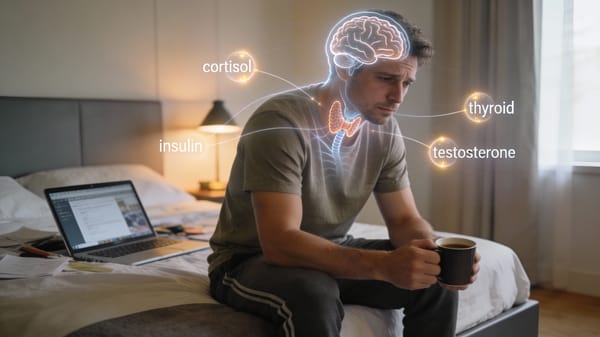
After about age 30, testosterone levels decline on average 1–1.5% per year.
For some men, that drop is subtle.
For others—especially those under a lot of stress, carrying extra weight, or experiencing poor sleep—it feels like a sudden crash.
Signs your energy might be hormone‑related include:
- Lower libido or erection quality
- Loss of muscle, increased belly fat
- More soreness after workouts
- Low mood or loss of confidence
- Persistent fatigue even with adequate sleep
Low testosterone is not the only cause of low energy in men after 30, but it is a major and often overlooked contributor.
2. Sleep quality, not just sleep quantity
Many men in their 30s technically get 6–8 hours in bed, but the quality is poor.
Common culprits:
- Obstructive sleep apnea (more common with weight gain)
- Insomnia or difficulty staying asleep
- Blue light and screens late at night
- Alcohol is used as a “sleep aid” that fragments deep sleep
Conditions like sleep apnea lead to:
- Micro‑awakenings all night
- Drops in oxygen
- Increased risk of low testosterone and metabolic issues
You wake up feeling like you never really rested.
Low energy in men after 30 often has as much to do with how they sleep as with how long they sleep.
3. Modern stress and the “always on” lifestyle
Your 30s often mean:
- Greater responsibility at work
- Young family or relationship pressure
- Financial stress, EMIs, ageing parents
Stress triggers cortisol—the main stress hormone.
Short‑term, cortisol keeps you sharp.
Chronically elevated, it:
- Disrupts sleep
- Increases cravings and belly fat
- Lowers testosterone
- Creates “tired but wired” exhaustion
You can push through on stress hormones for a while, but the eventual crash feels like your energy “vanished overnight.”
4. Food, cravings, and metabolism
Diet becomes a bigger deal after 30.
- More takeout, less home cooking.
- Long gaps without food, then big meals.
- Heavy reliance on caffeine and sugar.
Result: blood sugar spikes and crashes.
These show up as:
- Mid‑morning or mid‑afternoon slumps
- Hanger and irritability
- Strong cravings for quick carbs
Over time, this pattern can contribute to insulin resistance and weight gain, both strongly associated with low energy in men after 30.
5. Sedentary life and “desk body”
Men in their 20s often move more without trying—sports, walking, casual physical work.
In the 30s:
- More sitting
- Less spontaneous activity
- Occasional intense workouts that leave you wiped
Low daily movement reduces:
- Cardiovascular fitness
- Mitochondrial (cellular) energy production
- Deep sleep quality
Studies show physical activity can significantly improve testosterone and energy in overweight men—sometimes more than calorie restriction alone.
6. Nutrient gaps and medical issues
Low energy in men after 30 can also reflect:
- Vitamin B12 deficiency
- Low vitamin D
- Iron deficiency anaemia
- Thyroid disorders
- Diabetes, heart disease, and chronic infections
- Depression or anxiety
These require medical evaluation—not more coffee or another pre‑workout.
Symptoms of low energy in men after 30 should not be ignored
It can help to see your experience in clear terms.
Common symptoms include:
- Physical: constant fatigue, reduced stamina, more aches, weaker workouts, slower recovery.
- Mental: brain fog, poor focus, forgetfulness, decision fatigue.
- Emotional: irritability, low patience, feeling flat or unmotivated, loss of confidence.
- Hormonal/metabolic: belly fat gain, decreased libido, changes in erection quality, mild gynecomastia, sugar cravings.
If several of these describe your daily life, it is not “just in your head.”
Your physiology is asking for attention.
Step‑by‑step solutions: rebuilding energy from the inside out
Step 1: Rule out the serious stuff
Before hacking your routine, it is smart to get some basic checks.
A doctor can evaluate for:
- Anemia
- Thyroid problems
- Diabetes or prediabetes
- Sleep apnea
- Low testosterone or other hormone issues
- Chronic infections or inflammatory conditions
Think of this as checking for hidden “leaks in the tank” before trying to drive harder.
Step 2: Fix sleep like it actually matters
Treat sleep as infrastructure, not a luxury.
Foundational moves:
- Aim for 7–9 hours in bed with relatively consistent bed/wake times.
- Keep screens and heavy work out of the last hour before bed.
- Avoid large meals and alcohol close to bedtime.
- If you snore loudly, wake up choking, or feel extremely sleepy during the day, ask about a sleep study for apnea.
Better sleep alone often moves low energy in men after 30 from “constant fog” to “workable,” especially when combined with the next steps.
Step 3: Support hormones with everyday choices
Three well‑supported levers for healthier testosterone and hormone balance:
- Weight management – Even a 15–20 pound loss can significantly improve testosterone in overweight men.
- Strength training – Lifting weights 2–3 times per week boosts testosterone, growth hormone, and metabolic health. It also improves mood and confidence.
- Balanced diet – Adequate protein, healthy fats, and smart carbs support hormone production and blood sugar stability.
These are not quick fixes, but they are the closest thing to long‑term energy insurance men have.
Step 4: Stabilise blood sugar and cravings
To avoid crash‑and‑burn days:
- Base meals around protein (eggs, meat, fish, beans, tofu) + fibre (vegetables, whole grains) + healthy fats.
- Do not rely on coffee and toast alone for breakfast; add protein and fibre.
- Limit sugary drinks and ultra‑processed snacks that spike and crash your energy.
Stable blood sugar means fewer dramatic dips in focus, mood, and willpower.
Step 5: Move strategically, not randomly
For low energy in men after 30, the goal is sustainable movement, not punishment.
A realistic framework:
- Everyday movement: walking, taking stairs, and small physical tasks.
- 2–3 strength sessions per week (30–40 minutes is enough).
- Optional: 1–2 moderate cardio sessions you actually enjoy.
Movement improves:
- Mitochondrial function (your cells’ engines)
- Sleep depth
- Insulin sensitivity
- Testosterone levels
- Mental health
Energy creates more energy when movement is paced, not extreme.
Step 6: Take stress seriously—not personally
Stress is not just a feeling; it is biochemical.
Chronic stress:
- Elevates cortisol
- Interferes with testosterone
- Disrupts sleep
- Increases cravings and belly fat
Practical stress‑care for men in their 30s often includes:
- Clearer boundaries around work and availability
- Short, daily decompression rituals (walks, breath work, time outside)
- Honest conversations about load with partners or family
- Therapy or coaching when burnout or anxiety is persistent
You are not weak for needing recovery.
You are human—and your systems need downtime to keep producing energy.
Where targeted support fits in
Even with better sleep, nutrition, movement, and stress care, many men still feel like they are operating at 70–80% instead of the full capacity they remember.
At this point, some consider evidence‑informed nutritional support that aligns with their goals.
One option in this space is AlphaFuel Pro, a natural male vitality formula designed to support energy, metabolism, hormone balance, and resilience—not as a miracle cure, but as another lever in the system.
How AlphaFuel Pro can support men with low energy after 30
According to its official websites and product breakdowns, AlphaFuel Pro is formulated to:
- Support natural testosterone and male hormone balance
- Enhance healthy blood circulation and oxygen delivery
- Promote sustained, crash‑free energy
- Help regulate appetite and cravings
- Reduce stress‑related fatigue and support mood
It typically includes a blend of:
- Herbal extracts (such as Tongkat Ali, Tribulus, Maca, Panax Ginseng) are linked to male vitality and performance
- Adaptogens like Ashwagandha for stress response
- Nutrients that support energy metabolism and recovery
Here is how that ties into the five areas you care about.
Appetite control
When energy is unstable, many men rely on:
- Constant snacking
- Sugary drinks
- Late‑night eating
The information on AlphaFuel Pro emphasises hunger and craving control by:
- Helping balance appetite‑related hormones
- Supporting more stable blood sugar and energy, which makes emotional eating less tempting
With steadier appetite signals, it becomes easier to stick to the kind of nutrition pattern that actually restores long‑term energy.
Energy levels
AlphaFuel Pro markets itself as a stimulant‑free energy support, aiming to:
- Improve mitochondrial and metabolic efficiency
- Encourage the body to use stored fat more effectively for fuel
- Provide sustained, all‑day energy instead of brief spikes and crashes
In real terms, that can mean:
- Feeling more alert in the morning
- Fewer mid‑day slumps
- Enough energy left in the tank for workouts, family, and intimacy—key pain points for low energy in men after 30.
Mood balance
Because stress and low mood are tightly linked with fatigue, AlphaFuel Pro’s adaptogenic and circulation‑supporting ingredients aim to:
- Reduce perceived stress
- Support a calmer, more stable mood
- Improve mental clarity and focus
This does not replace therapy or professional treatment, but it can help reduce the “short fuse and foggy brain” many men report.
Metabolism
The formula is also positioned as a metabolic support tool that:
- Enhances fat‑burning efficiency
- Supports lean muscle maintenance
- Helps protect against metabolic stress and low‑grade inflammation
Given that metabolism, body composition, and testosterone are all interconnected, this kind of support can complement diet and exercise changes when addressing low energy in men after 30.
Stress reduction
AlphaFuel Pro leans on adaptogens that have been studied for:
- Supporting the body’s stress response
- Smoothing out cortisol spikes
- Reducing fatigue linked to chronic stress
Lower stress reactivity translates to:
- Better sleep quality
- More emotional bandwidth
- Less “tired but wired” exhaustion
All of which directly impact how energised you feel day to day.
Bringing it all together: you are not broken—you are out of balance
If “Low Energy in Men After 30” sounds uncomfortably familiar, it is important to remember:
- This is not a personal failure.
- It is a systems issue—hormones, sleep, metabolism, mood, and stress all interacting.
- Systems can be rebalanced.
A practical roadmap looks like:
- Get checked – Rule out medical causes and understand your baseline.
- Repair sleep – Protect 7–9 high‑quality hours as non‑negotiable.
- Lift and move – Use strength training and regular activity to support hormones and energy.
- Feed for energy – Prioritise protein, fibre, healthy fats, and fewer ultra‑processed foods.
- Respect stress and mental health – Build recovery into your life, not just your workouts.
- Consider targeted support – If it fits your goals and your doctor agrees, a formula like AlphaFuel Pro can help support appetite control, energy levels, mood balance, metabolism, and stress reduction as part of a bigger strategy—not a magic solution.
Talk with a qualified healthcare professional before starting any supplement, especially if you have health conditions or take medication.
You do not need to accept low energy in your 30s as your new normal.
With the right information, daily habits, and smart support, you can move from dragging yourself through the day to feeling capable, clear, and genuinely alive in your own skin again.