Why Men Feel Constantly Tired Even After 8 Hours of Sleep
You go to bed on time, get 8 hours of sleep, and still wake up exhausted. This guide explains why many men feel constantly tired, even after a full night’s sleep, covering hidden sleep disorders, hormones, metabolism, stress, and how to naturally rebuild real, lasting energy.

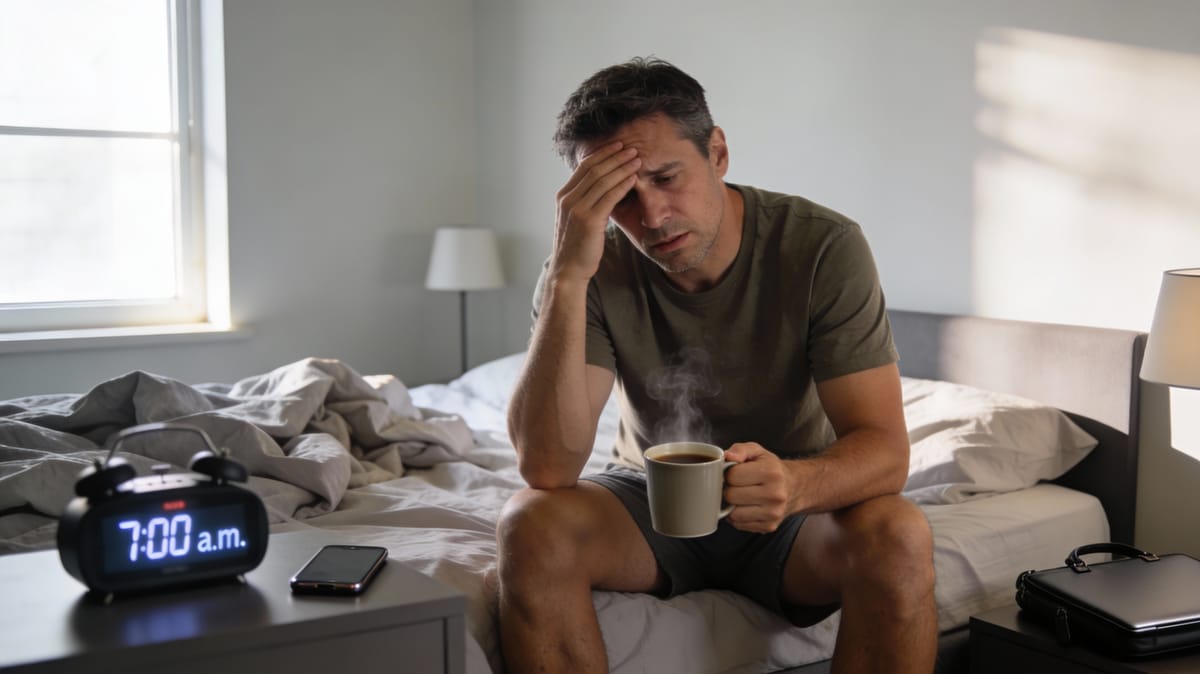
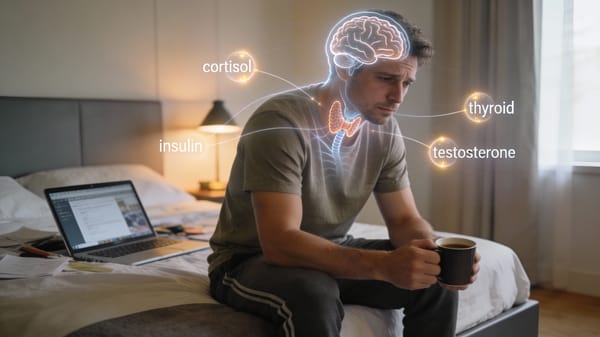
Waking up tired after a full night in bed feels like a private betrayal.
You do “everything right”—get 7–8 hours, avoid all‑nighters—and still spend the day dragging, unfocused, and wondering what happened to the man who used to have endless energy.
Waking up tired after a full night in bed feels like a private betrayal.
You do “everything right”—get 7–8 hours, avoid all‑nighters—and still spend the day dragging, unfocused, and wondering what happened to the man who used to have endless energy.
“I slept… so why do I still feel wrecked?”
For many men, fatigue does not look dramatic.
You still get up, go to work, and take care of responsibilities.
But under the surface, you feel:
- Heavy in the morning, like you could go back to bed.
- Fuzzy in the brain by mid‑day.
- Unmotivated to exercise or do anything extra.
- Irritable with people you care about.
You start to wonder:
- “Is this just getting older?”
- “Is my testosterone low?”
- “Is there something wrong with me?”
The honest answer is: maybe—but not in the way you think.
“Why Men Feel Constantly Tired Even After 8 Hours of Sleep” is usually about a mix of sleep quality, hidden medical issues, hormones, metabolism, stress, and lifestyle—not just laziness or age.
Quantity vs quality: 8 hours is not always 8 hours
Fragmented sleep
You can be in bed for 8 hours and still not get 8 hours of restorative sleep.
Common disruptors include:
- Frequent awakenings (bathroom trips, noise, stress).
- Light or shallow sleep stages.
- Alcohol or heavy meals before bed.
Deep sleep and REM sleep are when your body:
- Repairs tissues and muscles.
- Balances hormones, including testosterone and growth hormone.
- Consolidates memory and emotional processing.
If these stages are constantly interrupted, you will wake up feeling unrefreshed, even if the clock says you “slept enough.”
Sleep disorders: men often miss sleep disorders
Two big ones:
- Obstructive sleep apnea (OSA) – repeated breathing pauses at night, causing drops in oxygen and micro‑arousals.
- Chronic insomnia – difficulty falling or staying asleep, or non‑restorative sleep.
Sleep apnea is especially common in men, particularly if you:
- Snore loudly.
- Gasp or choke in sleep (often noticed by a partner).
- Wake with headaches or dry mouth.
- Feel very sleepy during the day.
OSA fragments sleep and is strongly linked to fatigue, low testosterone, weight gain, and higher cardiovascular risk.
If you consistently wake tired despite 7–9 hours in bed, getting screened for sleep apnea or insomnia is crucial, not optional.
How hormones quietly drain men’s energy
Testosterone: more than sex drive
Testosterone influences:
- Muscle mass and strength
- Red blood cell production
- Fat distribution
- Mood and motivation
- Energy and resilience
Low or sub‑optimal testosterone can show up as:
- Tired even after a full night’s sleep
- Midday crashes
- Reduced drive (for work, life, and intimacy)
- Brain fog and low mood
- Increased belly fat and loss of muscle
Sleep and testosterone also form a feedback loop:
- Poor sleep lowers testosterone.
- Low testosterone worsens sleep quality and causes more fatigue.
If you are consistently exhausted, especially with low libido and mood changes, it is worth talking to a clinician about hormone testing—not to chase perfection, but to rule out a very real contributor.
Cortisol and chronic stress
Cortisol is your main stress hormone.
In a healthy pattern, it is higher in the morning (to wake you up) and falls through the day.
Chronic stress—constant pressure from work, finances, family, or even unresolved health fears—can:
- Keep cortisol elevated for too long
- Disrupt sleep cycles
- Mimic many symptoms of low testosterone: fatigue, low mood, low drive
An over‑stressed system often feels wired at night and wiped during the day.
Metabolism, inflammation, and “tired but always hungry”
Even when sleep hours are adequate, underlying metabolic issues can sap energy.
Blood sugar swings
Diet patterns high in refined carbs and low in protein or fiber can cause rapid glucose spikes and crashes.
Crash symptoms:
- Mid‑morning or mid‑afternoon fatigue
- Irritability or “hanger”
- Brain fog
- Intense cravings for sugar or caffeine
Over time, this pattern can contribute to insulin resistance and type 2 diabetes, both associated with fatigue.
Chronic low‑grade inflammation
Obesity, poor diet, inactivity, and some chronic conditions can create low‑grade inflammation that:
- Interferes with hormone signalling
- Increases feelings of tiredness and malaise
Inflammatory markers like CRP and IL‑6 are linked to fatigue even in men with normal testosterone levels.
If your diet is heavy on ultra‑processed foods and light on whole foods, your body may be fighting fires all day—and you feel that as exhaustion.
Mental health, burnout, and hidden depression
Men often downplay or misread mental health symptoms.
Depression and anxiety in men frequently show up as:
- Irritability or anger
- Withdrawal and loss of interest
- Physical complaints like headaches, muscle tension
- Persistent fatigue and low motivation
Burnout—chronic workplace or life stress—can produce similar patterns.
You may think, “I am just lazy now” or “I lost my edge,” when in fact your nervous system and brain chemistry are overtaxed.
In these cases, 8 hours in bed cannot fix what therapy, boundaries, and sometimes medication are designed to help.
Lifestyle patterns that quietly sabotage energy
Even with “enough” sleep, certain habits drain men’s batteries:
- Late‑night screens and blue light suppress melatonin, shift your circadian rhythm, and make sleep lighter.
- Alcohol before bed – helps you fall asleep faster, but fragments sleep later in the night.
- Sedentary days – less deep sleep, lower fitness, more fatigue.
- Over‑training without recovery – constant soreness, elevated stress hormones, persistent exhaustion.
The combination of mental load + poor habits + hidden health issues is why so many men feel tired even with seemingly “good” sleep.
Why Men Feel Constantly Tired Even After 8 Hours of Sleep: The Big Picture
Put it all together, and you get a multi‑layered answer:
- Sleep quality vs quantity – sleep apnea, insomnia, and fragmented sleep.
- Hormones – low or sub‑optimal testosterone, cortisol imbalances.
- Metabolism and inflammation – blood sugar swings, weight, diet, chronic conditions.
- Mental health and stress – anxiety, burnout, depression.
- Lifestyle – light exposure, alcohol, activity level, workload.
No wonder willpower alone doesn’t fix it.
The good news: you do not have to “figure it out” by guessing.
You can approach your fatigue systematically.
Step‑by‑step: how to start reclaiming your energy
Step 1: Rule out the big medical culprits
If you have been tired for more than a few weeks despite 7–9 hours in bed, it is worth seeing a doctor to screen for:
- Sleep apnea or other sleep disorders
- Anemia
- Thyroid dysfunction
- Diabetes or prediabetes
- Significant hormone issues (including low testosterone)
This is not overkill—it is basic due diligence.
Step 2: Audit your nights, not just your hours
Ask yourself:
- Do I snore loudly or stop breathing (ask a partner)?
- Do I wake up often, even briefly?
- Do I use screens right until bed?
- Do I rely on alcohol to unwind?
Small changes—earlier wind‑down, less alcohol, darker room, consistent schedule—can measurably change how restorative your sleep is.
Step 3: Support hormones naturally
Simple, evidence‑backed ways to support testosterone and cortisol balance include:
- Lifting weights 2–3 times per week.
- Prioritising sleep and regular bed/wake times.
- Losing excess belly fat slowly, if needed.
- Getting enough protein and healthy fats.
- Managing stress with movement, boundaries, and breath work.
If labs confirm low testosterone or other hormonal issues, a clinician can discuss more direct treatments.
Step 4: Stabilise blood sugar and inflammation
You do not need a perfect diet, but some changes go a long way:
- Base meals on protein + fiber + healthy fats to reduce spikes and crashes.
- Reduce sugary drinks and ultra‑processed snacks.
- Add more vegetables, whole grains, and minimally processed foods.
Many men notice steadier energy within weeks just from better breakfast and lunch structure.
Step 5: Respect mental health
If fatigue comes with:
- Loss of interest or pleasure
- Persistent low mood or anxiety
- Trouble concentrating
- Thoughts that life feels pointless
Then talking with a mental health professional is not a luxury—it is essential.
Addressing depression, anxiety, or burnout often unlocks physical energy that no supplement or sleep hack can fix on its own.
Where a tool like AlphaFuel Pro can help
Once the foundations—sleep, medical screening, nutrition, movement, stress, and mental health are being addressed, many men still feel they are at 70–80% instead of 100%.
This is where targeted support can play a supportive, not magical, role.
The link you shared points to AlphaFuel Pro, a natural male‑support formula marketed to help with energy, stamina, hormones, circulation, and stress resilience.
According to its official information and expert write‑ups:
- AlphaFuel Pro combines herbal extracts and adaptogens like Ashwagandha, Maca, Panax Ginseng, Tongkat Ali, Tribulus, and others.
- It aims to support natural testosterone balance, healthy blood flow, and overall vitality.
- It includes ingredients that help regulate cortisol and promote a calmer, more resilient stress response.
Here is how that connects with appetite, energy, mood, metabolism, and stress.
Appetite control
When men are chronically tired and stressed, appetite often skews toward:
- Late‑night snacking
- Sugar and caffeine
- Over‑eating to “push through” fatigue
By supporting hormone balance (including testosterone and cortisol), AlphaFuel Pro may help:
- Reduce stress‑driven cravings
- Supports more stable blood sugar when paired with decent nutrition
- Make it easier to avoid constant grazing and emotional eating
It is not a diet pill, but a hormonal and stress support that can make appetite patterns more manageable.
Energy levels
This is the core promise for many men.
AlphaFuel Pro is formulated to:
- Support red blood cell production and circulation (through nitric‑oxide‑supporting herbs).
- Enhance cellular energy via ingredients like Ginseng and Maca.
- Reduce stress‑related fatigue with adaptogens like Ashwagandha.
In practical terms, men may experience:
- Less “I woke up tired” feeling
- Improved mid‑day alertness
- More drive to exercise and engage in life
This only works well when paired with sleep and lifestyle changes—but it can be a meaningful extra push.
Mood balance
Chronic fatigue often comes with irritability and low mood.
By helping regulate cortisol and supporting a more stable hormonal environment, AlphaFuel Pro may:
- Promote calmer, steadier mood
- Reduce the edge of stress
- Support clearer thinking and focus
Again, it is not a replacement for therapy or psychiatric care, but a potential ally in feeling more emotionally even.
Metabolism
Some ingredients in AlphaFuel Pro support:
- Lean muscle maintenance (important for metabolic rate)
- Healthy blood flow and nutrient delivery
- Better workout capacity and recovery
Combined with strength training and sensible nutrition, this can help men move away from the “soft, sluggish” feeling and toward a leaner, more energised body—another important factor in how fatigue is experienced.
Stress reduction
AlphaFuel Pro leans heavily on adaptogens—herbs known for helping the body adapt to stress.
Ashwagandha, for example, has been studied for:
- Reducing cortisol
- Improving perceived stress
- Supporting sleep quality and daytime energy
Lower stress hormones + better sleep = a nervous system that no longer lives in constant fight‑or‑flight—key for sustainable energy.
Bringing it all together: your tiredness is not a character flaw
If “Why Men Feel Constantly Tired Even After 8 Hours of Sleep” describes your life, the takeaway is:
You are not lazy.
You are not “just getting old.”
You are dealing with a multi‑factor problem that deserves a multi‑factor solution.
That solution includes:
- Getting checked for sleep disorders and medical issues.
- Treating sleep quality as seriously as sleep quantity.
- Supporting hormones and metabolism with movement, nutrition, and rest.
- Addressing stress and mental health honestly.
- Considering targeted support like AlphaFuel Pro from the official site (https://mwebaro.com/11946/1343/3/?) as one piece of your plan for appetite control, energy, mood, metabolism, and stress—not as a miracle cure.
Talk with a qualified healthcare professional before starting any supplement, especially if you have health conditions or take medications.
Then pick one step this week—book that sleep study, adjust your evening routine, start a short strength program, or explore whether AlphaFuel Pro fits your goals.
Your energy is not gone forever.
With the right information and support, you can move from “always tired” to steadily stronger, clearer, and more alive in your own body again.